Julien René
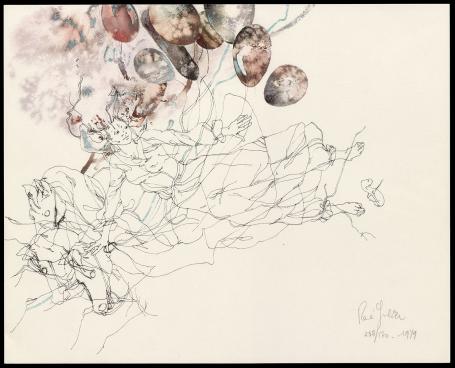
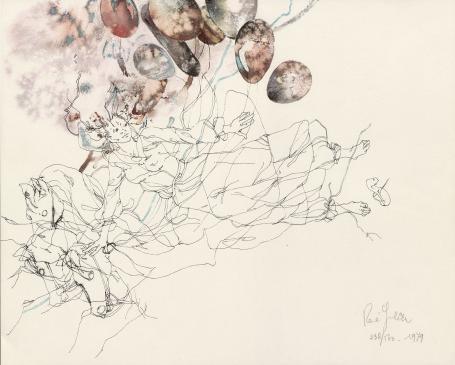
René Julien was a Belgian artist, born in Hollogne-aux-Pierres in 1937 and died in Cavaillon, France in 2016. He was a painter, draftsman, printmaker, sculptor, and designer of tapestries and jewelry. He studied at the Academy in Liège from 1951 to 1957. In 1957, he settled in Brussels, where he created large stained-glass windows, decorative panels and frescoes. He also worked as a set decorator during the construction of Expo 58. He found his inspiration in children and women, and occasionally flirted with surrealism. From the press: “The art of R.J. is related to that of the Renaissance. This means, ipso facto, that it falls under the heading of great classical painting, which sets high standards. This implies a perfect knowledge of materials, pictorial expression and drawing. It is an art of expressive gestures and strong monumentality, and yet each painting is executed with the mastery of miniature work,” and “R.J. caresses and explores the female body, both in its physical intimacy and in the spontaneous expression of its feelings and emotions. Although the forms may seem classical, his works display technical prowess and symbolic allusions that are entirely contemporary.” His work exudes poetry and at times a touch of fantasy. He exhibited regularly at the Art Théma gallery in Brussels. He taught drawing at the Academy in Liège from 1960 to 1969, and later became director of the Academy in Sint-Joost-ten-Node. Around 1982, René Julien settled at the Château Vert in Cavaillon, France, where he increasingly focused on sculpture. There, he created mainly female and child figures in graceful and expressive poses. His work can be found in the Print Room in Brussels. He is listed in BAS II and Two Centuries of Signatures of Belgian Artists (Piron).